Since November 2025, Ofsted has been using its renewed Early Years Inspection Toolkit to inspect nurseries, preschools, childminders and other registered early years settings.
The new approach marked a significant shift in the way inspections are carried out and reported. Instead of receiving a single overall judgement such as ‘Good’ or ‘Outstanding’, settings now receive a more detailed report card covering different areas of their provision.
Understanding the five Ofsted grades
The six graded evaluation areas use five possible grades:
Exceptional
The highest level of practice. This is intended to recognise provision of an exceptionally high standard nationally, where practice is considered strong enough to be shared more widely.
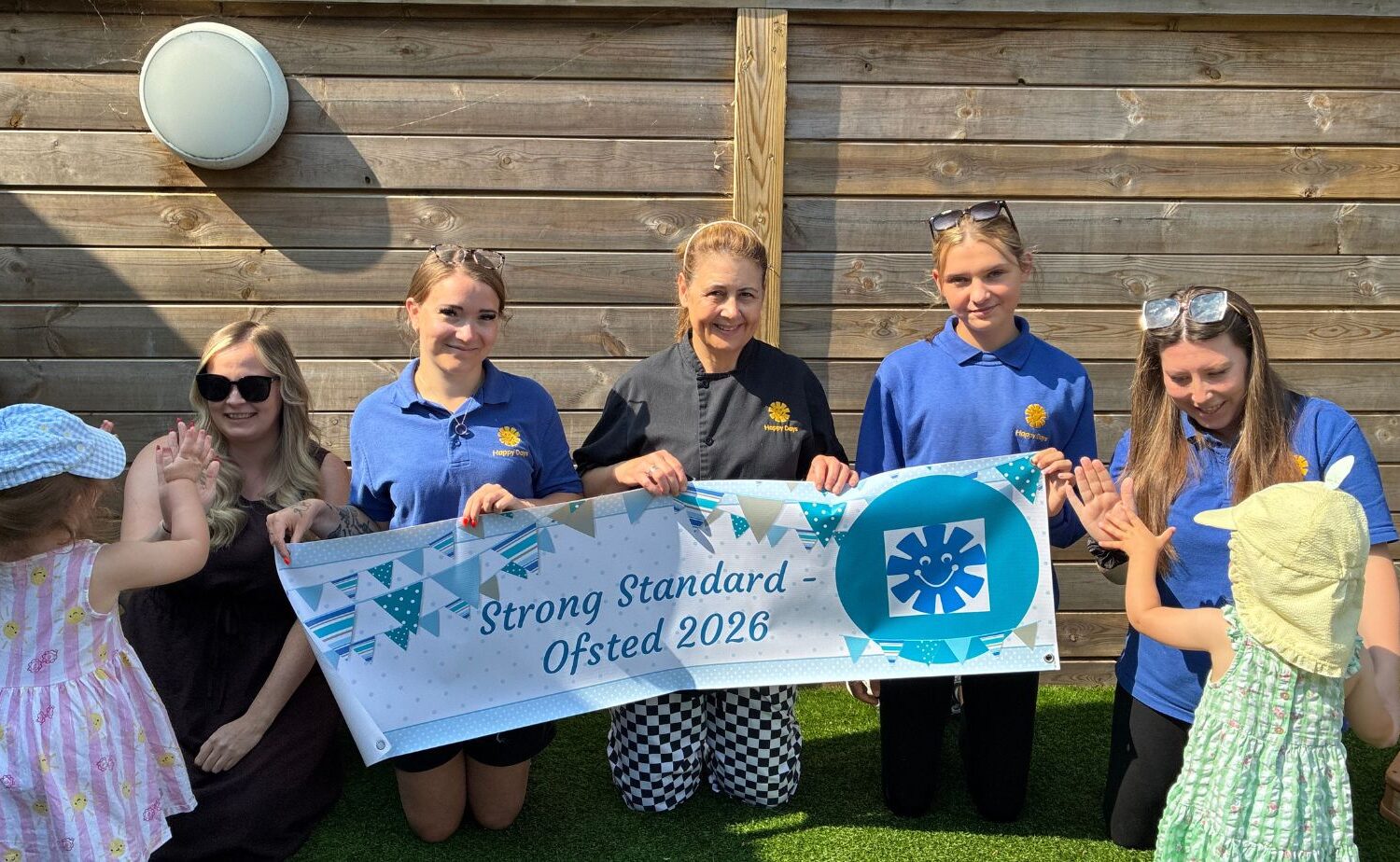
Strong standard
The setting has met the expected standard and demonstrates consistently strong, embedded and highly effective practice.
Expected standard
This is an important one to understand. ‘Expected standard’ is a positive outcome, not a middle-of-the-road or average grade. It means the relevant EYFS requirements and all the standards for that evaluation area have been met.
Needs attention
The expected standard has not been met, but any breaches of EYFS requirements do not have a significant impact on children’s safety, wellbeing or learning and development.
Urgent improvement
Urgent action is needed. This may apply where breaches of EYFS requirements have a significant impact on children’s safety, wellbeing or learning and development, or where other serious concerns apply.
It is worth remembering that the new grades should not be directly compared with the old ‘Good’, ‘Outstanding’ or ‘Requires Improvement’ judgements. Ofsted has specifically said that there is no direct read-across between the old and new systems.
The seven areas Ofsted now looks at
The renewed framework gives parents and providers a more detailed picture of quality.
Early years report cards cover seven evaluation areas:
- Safeguarding
- Inclusion
- Curriculum and teaching
- Achievement
- Behaviour, attitudes and establishing routines
- Children’s welfare and wellbeing
- Leadership and governance
Safeguarding is judged separately as either ‘Met’ or ‘Not met’. The other six evaluation areas are graded using the new five-point scale.
This is important because there is no longer a single overall Ofsted grade for a setting. Instead, families can see more clearly where a nursery is performing particularly well and where there may be areas for improvement.
What does ‘expected standard’ actually mean?
For parents and practitioners, ‘expected standard’ is perhaps the most important grade to understand.
Ofsted describes it as the standard inspectors expect settings to meet. It means the setting is meeting the relevant legal requirements and the standards set out within the toolkit.
Inspectors use a ‘secure fit’ approach when grading. This means they consider whether all of the standards required for a particular grade have been met, rather than simply deciding which grade feels like the closest overall match.
So, an ‘expected standard’ judgement should not be viewed as a disappointing result. It indicates that the setting is meeting the expected standard of education and care.
From 1 September 2026, Ofsted will begin using an updated version of the Early Years Inspection Toolkit, reflecting changes to the Early Years Foundation Stage (EYFS) and providing greater clarity around some of the areas inspectors will consider.
So, what does the toolkit mean in practice and what should early years leaders, practitioners and parents understand about the latest changes?
What is the Ofsted Early Years Inspection Toolkit?
The Early Years Inspection Toolkit sets out the areas Ofsted evaluates during an inspection and the standards used to grade them. It replaced the previous early years inspection handbook when the renewed inspection framework came into effect in November 2025.
The toolkit is not simply an inspection checklist. Ofsted says it can also be used by leaders to support self-evaluation and continuous improvement.
A key principle of the renewed approach is that inspectors should build their judgements from what they see and hear in the setting.
Inspectors gather first-hand evidence through:
- Observing children and practitioners during everyday experiences and routines
- Professional conversations with leaders and staff
- Looking at how policies, systems and processes work in practice
- Considering children’s experiences, development and wellbeing
- Reviewing relevant documentation where necessary
Importantly, settings are not expected to produce paperwork specifically for an Ofsted inspection. Inspectors should focus on documentation relating to statutory requirements or information that forms part of a setting’s normal business processes.
This means that strong practice should be visible in everyday life at the setting, not created specifically for inspection day.
Inclusion is a priority across the toolkit
One of the most significant themes running through the renewed framework is inclusion.
Ofsted considers how well settings identify and support children who may face additional barriers to their learning and wellbeing. This includes disadvantaged children, children with SEND, children known or previously known to children’s social care and children who may face other barriers.
Inspectors consider whether leaders:
- Identify children’s needs quickly and accurately
- Have high expectations for every child
- Reduce barriers to learning and wellbeing
- Make appropriate adaptations and reasonable adjustments
- Work effectively with parents and professionals
- Use specialist advice when necessary
- Monitor children’s progress and adapt support where needed
The message is clear: inclusion is not about providing a separate experience for some children. It is about ensuring every child can access an ambitious curriculum and has the support they need to shine.
Curriculum and teaching: what does Ofsted want to see?
The toolkit places significant emphasis on the quality and ambition of the curriculum.
Inspectors consider whether leaders have designed a curriculum that builds children’s knowledge and skills progressively across the seven areas of learning and development.
There is particular emphasis on:
- Communication and language
- Physical development
- Personal, social and emotional development
- Literacy
- Mathematics
- Understanding the world
- Expressive arts and design
The updated toolkit also makes clear that teaching is much broader than formal adult-led activities.
Teaching can happen through play, routines, conversations, storytelling, modelling, questioning, explaining, demonstrating, interactions and the environment itself.
This means everyday moments matter.
A conversation at lunchtime, a practitioner modelling new vocabulary during play or encouraging children to revisit a mathematical idea can all contribute to the quality of teaching.
The September 2026 version also adds clarity around explicit teaching of mathematics. Inspectors will consider how well settings develop children’s mathematical knowledge, vocabulary, confidence and understanding through direct teaching, routines and play.
Communication and language remains fundamental
The updated toolkit places a particularly strong emphasis on communication and language.
Inspectors will consider whether the curriculum gives children frequent opportunities to hear, practise and use language, including through stories, songs, rhymes, shared reading and conversations.
The September 2026 toolkit clarifies that references to vocabulary mean English vocabulary.
For practitioners, this reinforces the importance of knowing which words and concepts children need to learn and deliberately creating opportunities for them to hear, understand, practise and use those words in different contexts.
Achievement is about what children know and can do
The achievement judgement is not simply about whether children have reached a particular developmental milestone.
Ofsted considers the knowledge and skills children develop across the seven areas of learning and development and how well they are prepared for their next stage of education.
Inspectors consider children’s different starting points, ages, stages and needs.
They will look at whether children:
- Develop age- and stage-appropriate knowledge and skills
- Build strong foundations in the prime areas
- Develop communication and interaction skills
- Become increasingly confident and independent
- Develop curiosity, perseverance and resilience
- Are prepared for their next stage of learning
Importantly, the toolkit recognises that children develop at different rates. What matters is whether leaders understand children’s needs and take effective action to support them.
Behaviour, attitudes and routines
The renewed framework also gives greater prominence to behaviour, attitudes and establishing routines.
For young children, this is not simply about whether children ‘behave’.
Inspectors consider how practitioners help children develop:
- Positive relationships
- Self-regulation
- Emotional awareness
- Confidence and resilience
- Independence
- Respect for others
- Positive attitudes towards learning
Routines are also important. Ofsted considers how settings work with families to promote attendance and punctuality and help children develop positive habits for future learning.
The approach is intended to be age-appropriate and inclusive. Practitioners are expected to make reasonable adjustments and adaptations where children need additional support, while maintaining high expectations.
One of the most important changes coming into effect on 1 September 2026 relates to children’s welfare and wellbeing.
The updated toolkit reflects planned changes to the EYFS around safer sleeping, weaning and eating arrangements. Ofsted has added more detail to explain how inspectors will assess these areas in practice.
From September, inspectors will look at whether settings understand and effectively implement statutory guidance relating to:
- Safe sleeping arrangements
- Weaning
- Safer eating
- Food and dietary requirements
- Allergy and choking risks
- Appropriate supervision during mealtimes
For babies and children under two, safe sleeping will receive particular attention.
Inspectors will consider whether children are placed safely to sleep, whether sleep spaces, bedding and temperatures are appropriate, and whether children are appropriately supervised.
The updated toolkit also considers whether children are supervised safely while eating and whether practitioners understand arrangements for allergies, food intolerances, dietary requirements and choking risks.
These changes reinforce a simple principle: high-quality care is an essential part of high-quality early education.
Safeguarding: everyone’s responsibility
Safeguarding remains separate from the six graded evaluation areas and is judged as either Met or Not met.
The updated toolkit provides additional information about practitioners’ responsibilities to protect children from harm.
Ofsted’s expectations include an open safeguarding culture where staff feel confident raising concerns and understand the procedures they must follow.
Inspectors will consider whether leaders and practitioners:
- Recognise potential safeguarding concerns
- Understand their individual responsibilities
- Follow safeguarding policies and procedures
- Know when to seek help from external agencies
- Understand safer recruitment requirements
- Respond appropriately to allegations and concerns about adults
- Remain vigilant and maintain an attitude of ‘it could happen here’
- Listen to children, parents and practitioners
- Reflect on safeguarding practice and respond to challenge
The September update also clarifies that poor care practices can, in some circumstances, have implications for a setting’s safeguarding judgement, particularly where children have been harmed or are at risk of harm.
Leadership and governance: knowing your setting
Leadership is another important part of the toolkit.
Ofsted wants leaders to understand their setting’s strengths, weaknesses, context and priorities and, importantly, to know whether the actions they take are actually making a difference.
This includes:
- Having a clear vision for children
- Understanding the EYFS and statutory responsibilities
- Identifying the right priorities for improvement
- Supporting staff wellbeing and manageable workloads
- Providing relevant professional development
- Working positively with parents
- Using resources effectively
- Ensuring governance arrangements provide appropriate support and challenge
The updated toolkit also places emphasis on professional learning around the curriculum, behaviour, inclusion and the care of babies, including safer sleeping, weaning and eating.
The safer care requirements are perhaps the most significant changes for day-to-day practice, but the September update includes a number of other clarifications.
Ofsted has also:
- Added further information about provider exemptions from EYFS learning and development requirements
- Clarified the standards providers must meet alongside relevant EYFS requirements
- Added detail around personal education plans within inclusion evidence gathering
- Clarified how inspectors gather evidence around mathematics
- Updated guidance around children with SEND and inclusion leadership
- Added further guidance around virtual school heads and children known to children’s social care
- Updated guidance around inspector conduct and reasonable adjustments
- Added further detail about recruitment, DBS checks and paediatric first aid
- Clarified expectations around mobile phone use during inspections
- Updated guidance for settings where no children are present during the inspection timeframe
Ofsted has described these as part of its annual update process. Going forward, the intention is to update inspection materials annually ahead of the following September.
How often will nurseries be inspected?
Inspection frequency has also changed.
From April 2026, Ofsted began introducing a four-year inspection window for providers on the Early Years Register, with implementation being phased in.
Under the current arrangements, settings that meet the expected standard or above across their evaluation areas will usually be inspected again within four years. Settings receiving ‘needs attention’ will usually be inspected within 12 months, while those receiving ‘urgent improvement’ will usually be inspected within six months. Ofsted can inspect sooner where concerns or risks require it.
Newly registered providers will usually receive their first inspection within 18 months of registration.
This means inspection reports should increasingly provide families with a more current picture of a setting’s quality.
Ofsted report cards: a clearer picture for parents
The move to report cards is one of the most visible changes for families.
Rather than one overall judgement, parents can see how a setting performs across individual areas of provision.
Report cards include narrative information explaining the grade, strengths and areas for improvement, helping parents understand more than a single headline judgement.
Ofsted has also introduced QR code badgesfor early years settings. These can link parents and carers directly to the setting’s individual Ofsted reports page, making inspection information easier to access.
What does all of this mean for early years settings?
Perhaps the biggest takeaway from the toolkit is that inspection preparation should not be about creating a perfect version of the setting for Ofsted.
Instead, the focus should be on ensuring that the quality of practice seen every day is strong, consistent and understood by the whole team.
Leaders should be able to explain:
What are we trying to achieve for children?
How do we know what children need?
How do we adapt our practice when those needs change?
How do we know our curriculum is working?
How do we know children are making progress?
How do we keep children safe and well?
How do we know our improvements are making a difference?
These questions sit at the heart of the toolkit.
What should parents look for?
For parents, the new system can provide a much richer picture of a nursery than the previous single overall judgement.
When reading an Ofsted report, consider:
- How well does the setting support children’s learning and development?
- How does it support children with different needs?
- What does the report say about children’s welfare and wellbeing?
- How strong are the setting’s safeguarding arrangements?
- How effectively does leadership identify and act on areas for improvement?
- What does the report say about the quality of relationships and interactions?
- Are there clear strengths that matter to your child and family?
And remember: an ‘expected standard’ grade is a positive judgement. It means the relevant expected standards have been met.
The renewed Ofsted framework is ultimately about more than passing an inspection.
The strongest message running through the toolkit is that quality should be visible in children’s everyday experiences, in the relationships they form, the language they hear, the opportunities they have to explore and learn, the support they receive and the way adults keep them safe.
The September 2026 updates strengthen that message further, particularly around safeguarding, safer sleeping, weaning and eating, inclusion and the quality of care.
For early years providers, the toolkit can therefore be seen not simply as something to prepare for, but as a useful framework for asking an even more important question:
Are we consistently giving every child the care, education, support and sense of belonging they need to shine?
That is what high-quality early years practice is really about and it is at the heart of what Ofsted is looking for.