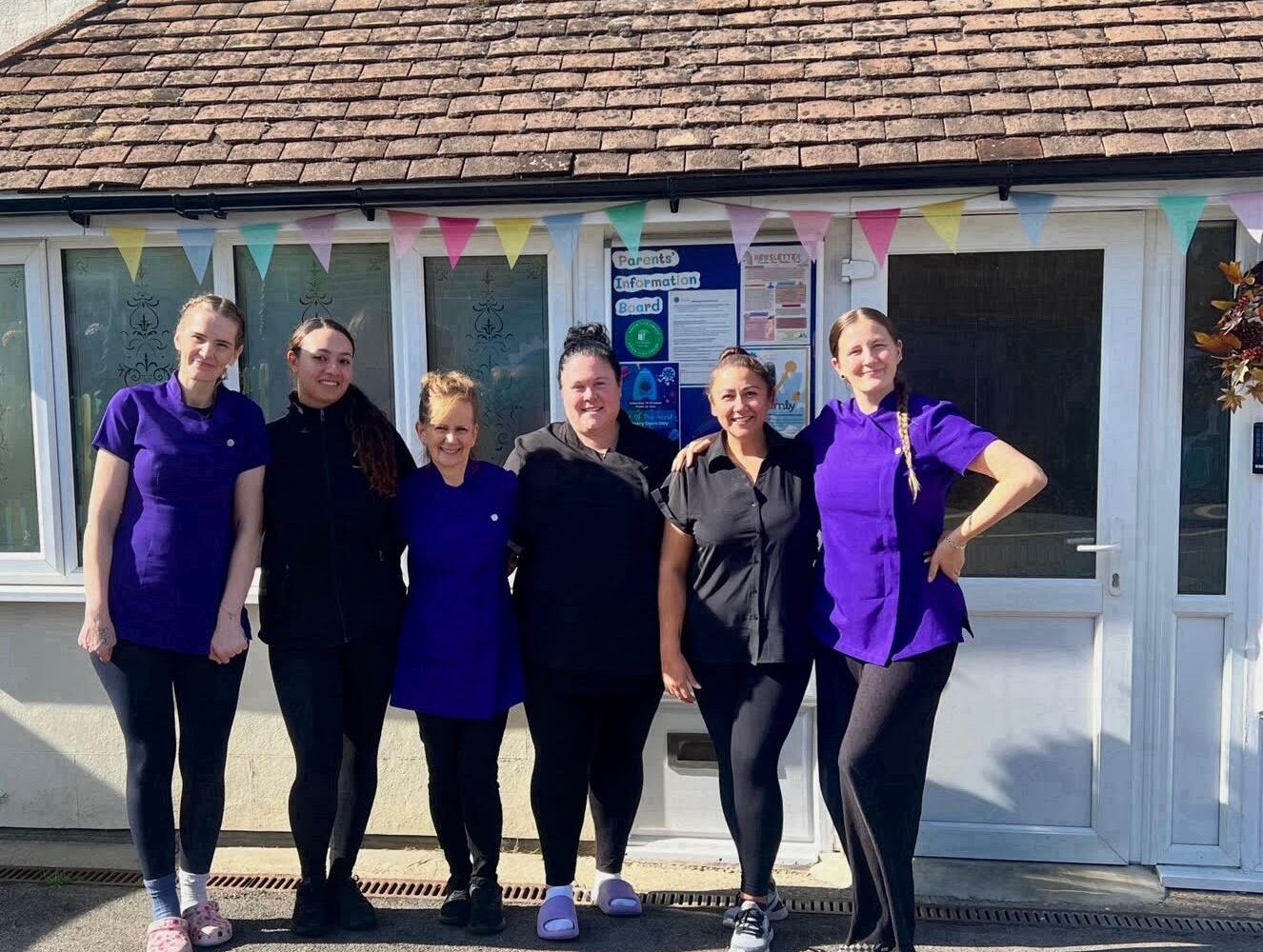
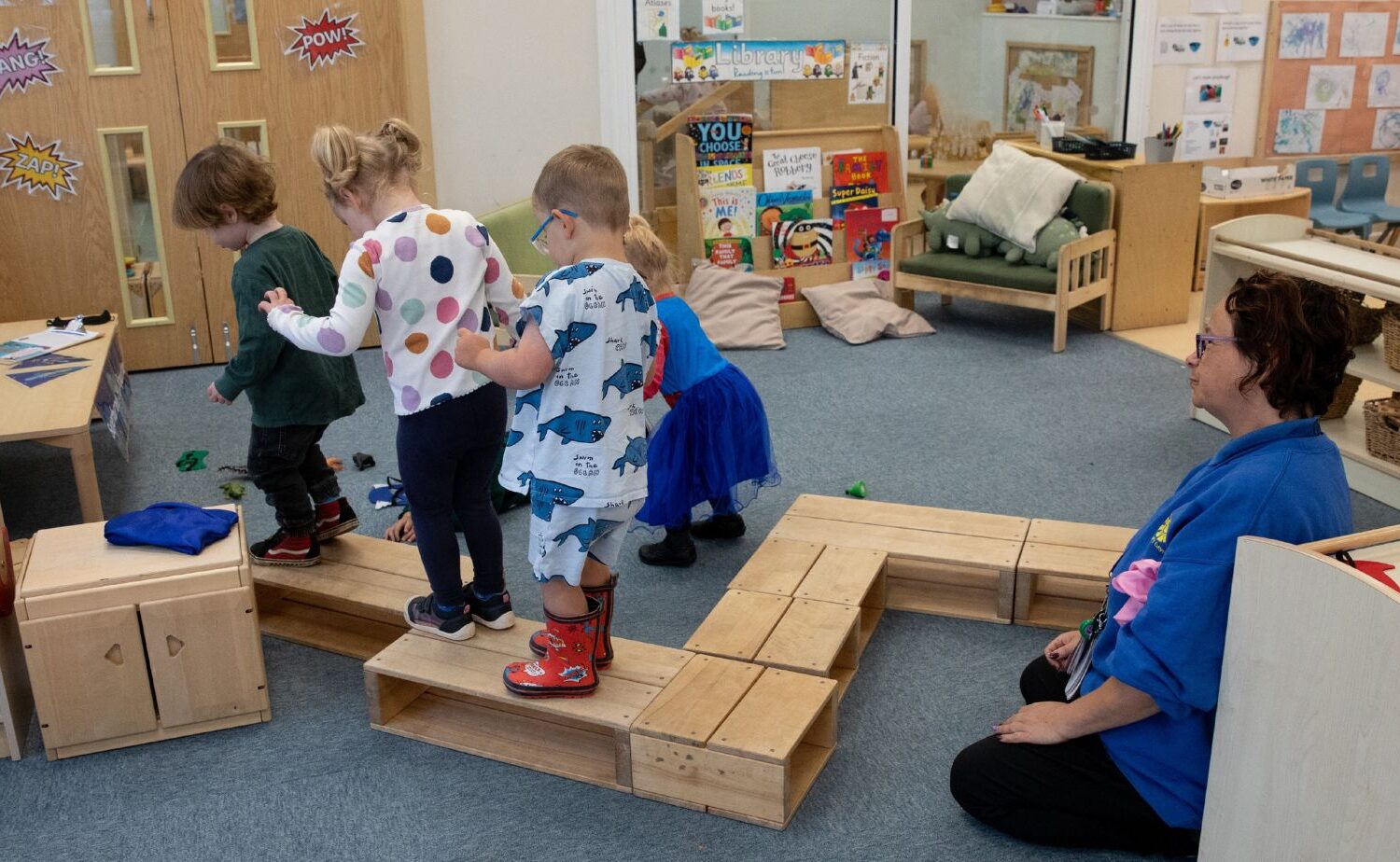
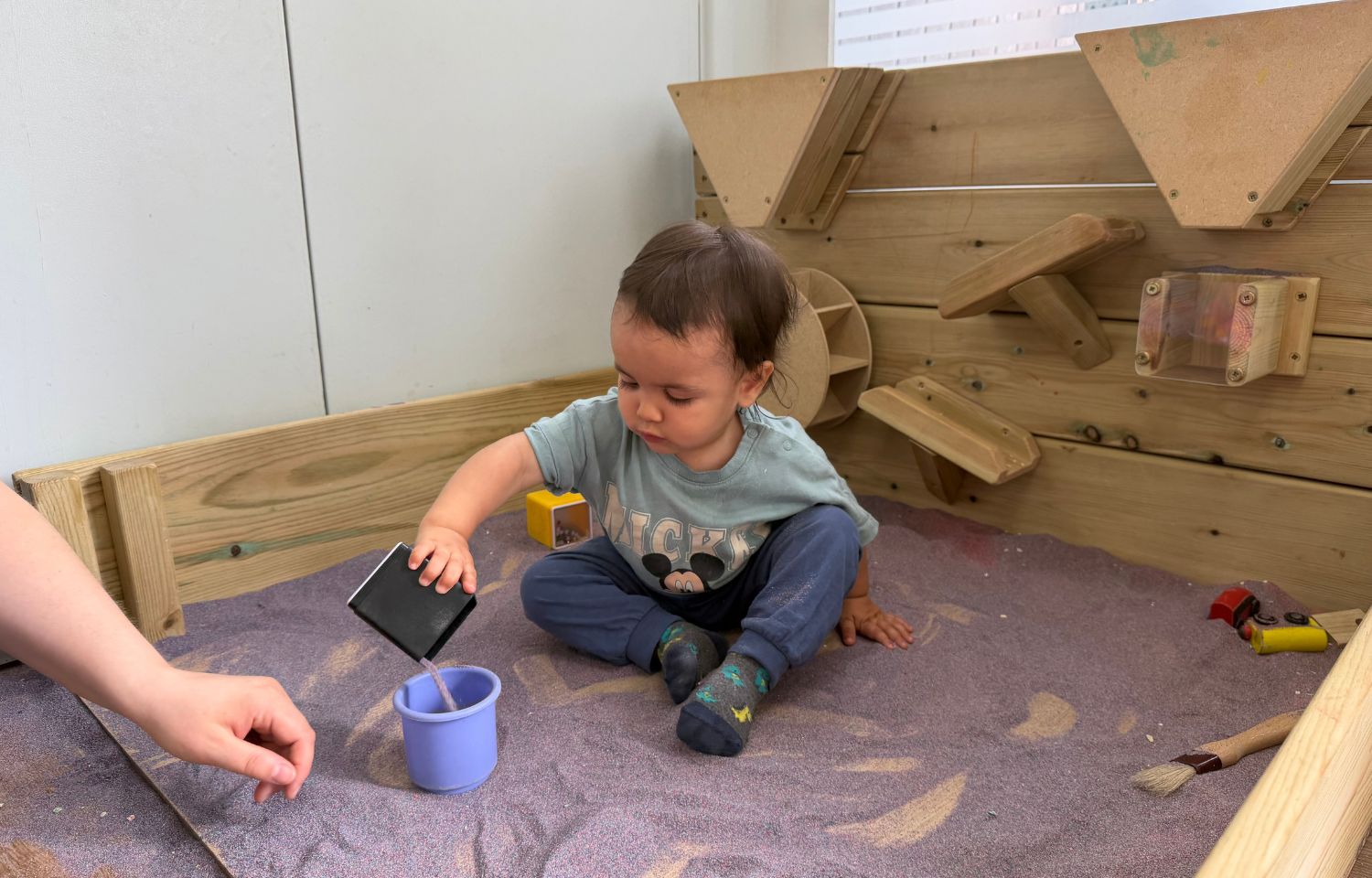
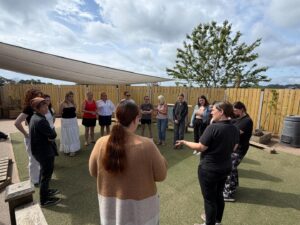
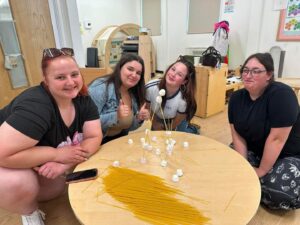
Join us for a fantastic opportunity to see our nursery and ask any questions you may have. We look forward to welcoming you and your family to Happy Days Salisbury!

Explore our state-of-the-art facilities:
⭐ Tour our nursery designed for your child’s learning and development.
⭐ Meet our friendly and dedicated nursery team.

Learn everything you need to know:
✅ Early years funding options and fees
✅ Nursery opening hours and tour availability
✅ Nutritious meal plans and delicious menus
✅ Engaging early years curriculum
✅ …and much more!

This is a fantastic opportunity for you to see our nursery and ask any questions you may have. We look forward to welcoming you and your family to Happy Days!

No need to book – just pop in when you can!
 📍 Happy Days Nursery & Pre-School, Rhodes Moorhouse Way, Longhedge, Salisbury, SP4 6SA
📞 01722 510 009
📩 [email protected]

Understanding the Ofsted Early Years Inspection Toolkit: What’s Changing from September 2026?

11 mins
Aug 13, 2026

Since November 2025, Ofsted has been using its renewed Early Years Inspection Toolkit to inspect nurseries, preschools, childminders and other registered early years settings.

The new approach marked a significant shift in the way inspections are carried out and reported. Instead of receiving a single overall judgement such as ‘Good’ or ‘Outstanding’, settings now receive a more detailed report card covering different areas of their provision.

Understanding the five Ofsted grades

The six graded evaluation areas use five possible grades:

Exceptional
The highest level of practice. This is intended to recognise provision of an exceptionally high standard nationally, where practice is considered strong enough to be shared more widely.

Strong standard
The setting has met the expected standard and demonstrates consistently strong, embedded and highly effective practice.

Expected standard
This is an important one to understand. ‘Expected standard’ is a positive outcome, not a middle-of-the-road or average grade. It means the relevant EYFS requirements and all the standards for that evaluation area have been met. 

Needs attention
The expected standard has not been met, but any breaches of EYFS requirements do not have a significant impact on children’s safety, wellbeing or learning and development.

Urgent improvement
Urgent action is needed. This may apply where breaches of EYFS requirements have a significant impact on children’s safety, wellbeing or learning and development, or where other serious concerns apply. 

It is worth remembering that the new grades should not be directly compared with the old ‘Good’, ‘Outstanding’ or ‘Requires Improvement’ judgements. Ofsted has specifically said that there is no direct read-across between the old and new systems. 

The seven areas Ofsted now looks at

The renewed framework gives parents and providers a more detailed picture of quality.

Early years report cards cover seven evaluation areas:

  1. Safeguarding
  2. Inclusion
  3. Curriculum and teaching
  4. Achievement
  5. Behaviour, attitudes and establishing routines
  6. Children’s welfare and wellbeing
  7. Leadership and governance

Safeguarding is judged separately as either ‘Met’ or ‘Not met’. The other six evaluation areas are graded using the new five-point scale. 

This is important because there is no longer a single overall Ofsted grade for a setting. Instead, families can see more clearly where a nursery is performing particularly well and where there may be areas for improvement.

What does ‘expected standard’ actually mean?

For parents and practitioners, ‘expected standard’ is perhaps the most important grade to understand.

Ofsted describes it as the standard inspectors expect settings to meet. It means the setting is meeting the relevant legal requirements and the standards set out within the toolkit.

Inspectors use a ‘secure fit’ approach when grading. This means they consider whether all of the standards required for a particular grade have been met, rather than simply deciding which grade feels like the closest overall match. 

So, an ‘expected standard’ judgement should not be viewed as a disappointing result. It indicates that the setting is meeting the expected standard of education and care.

From 1 September 2026, Ofsted will begin using an updated version of the Early Years Inspection Toolkit, reflecting changes to the Early Years Foundation Stage (EYFS) and providing greater clarity around some of the areas inspectors will consider.

So, what does the toolkit mean in practice and what should early years leaders, practitioners and parents understand about the latest changes?

What is the Ofsted Early Years Inspection Toolkit?

The Early Years Inspection Toolkit sets out the areas Ofsted evaluates during an inspection and the standards used to grade them. It replaced the previous early years inspection handbook when the renewed inspection framework came into effect in November 2025.

The toolkit is not simply an inspection checklist. Ofsted says it can also be used by leaders to support self-evaluation and continuous improvement. 

A key principle of the renewed approach is that inspectors should build their judgements from what they see and hear in the setting.

Inspectors gather first-hand evidence through:

  • Observing children and practitioners during everyday experiences and routines
  • Professional conversations with leaders and staff
  • Looking at how policies, systems and processes work in practice
  • Considering children’s experiences, development and wellbeing
  • Reviewing relevant documentation where necessary

Importantly, settings are not expected to produce paperwork specifically for an Ofsted inspection. Inspectors should focus on documentation relating to statutory requirements or information that forms part of a setting’s normal business processes. 

This means that strong practice should be visible in everyday life at the setting, not created specifically for inspection day.

Inclusion is a priority across the toolkit

One of the most significant themes running through the renewed framework is inclusion.

Ofsted considers how well settings identify and support children who may face additional barriers to their learning and wellbeing. This includes disadvantaged children, children with SEND, children known or previously known to children’s social care and children who may face other barriers.

Inspectors consider whether leaders:

  • Identify children’s needs quickly and accurately
  • Have high expectations for every child
  • Reduce barriers to learning and wellbeing
  • Make appropriate adaptations and reasonable adjustments
  • Work effectively with parents and professionals
  • Use specialist advice when necessary
  • Monitor children’s progress and adapt support where needed

The message is clear: inclusion is not about providing a separate experience for some children. It is about ensuring every child can access an ambitious curriculum and has the support they need to shine.

Curriculum and teaching: what does Ofsted want to see?

The toolkit places significant emphasis on the quality and ambition of the curriculum.

Inspectors consider whether leaders have designed a curriculum that builds children’s knowledge and skills progressively across the seven areas of learning and development.

There is particular emphasis on:

  • Communication and language
  • Physical development
  • Personal, social and emotional development
  • Literacy
  • Mathematics
  • Understanding the world
  • Expressive arts and design

The updated toolkit also makes clear that teaching is much broader than formal adult-led activities.

Teaching can happen through play, routines, conversations, storytelling, modelling, questioning, explaining, demonstrating, interactions and the environment itself. 

This means everyday moments matter.

A conversation at lunchtime, a practitioner modelling new vocabulary during play or encouraging children to revisit a mathematical idea can all contribute to the quality of teaching.

The September 2026 version also adds clarity around explicit teaching of mathematics. Inspectors will consider how well settings develop children’s mathematical knowledge, vocabulary, confidence and understanding through direct teaching, routines and play.

Communication and language remains fundamental

The updated toolkit places a particularly strong emphasis on communication and language.

Inspectors will consider whether the curriculum gives children frequent opportunities to hear, practise and use language, including through stories, songs, rhymes, shared reading and conversations.

The September 2026 toolkit clarifies that references to vocabulary mean English vocabulary.

For practitioners, this reinforces the importance of knowing which words and concepts children need to learn and deliberately creating opportunities for them to hear, understand, practise and use those words in different contexts.

Achievement is about what children know and can do

The achievement judgement is not simply about whether children have reached a particular developmental milestone.

Ofsted considers the knowledge and skills children develop across the seven areas of learning and development and how well they are prepared for their next stage of education.

Inspectors consider children’s different starting points, ages, stages and needs.

They will look at whether children:

  • Develop age- and stage-appropriate knowledge and skills
  • Build strong foundations in the prime areas
  • Develop communication and interaction skills
  • Become increasingly confident and independent
  • Develop curiosity, perseverance and resilience
  • Are prepared for their next stage of learning

Importantly, the toolkit recognises that children develop at different rates. What matters is whether leaders understand children’s needs and take effective action to support them.

Behaviour, attitudes and routines

The renewed framework also gives greater prominence to behaviour, attitudes and establishing routines.

For young children, this is not simply about whether children ‘behave’.

Inspectors consider how practitioners help children develop:

  • Positive relationships
  • Self-regulation
  • Emotional awareness
  • Confidence and resilience
  • Independence
  • Respect for others
  • Positive attitudes towards learning

Routines are also important. Ofsted considers how settings work with families to promote attendance and punctuality and help children develop positive habits for future learning.

The approach is intended to be age-appropriate and inclusive. Practitioners are expected to make reasonable adjustments and adaptations where children need additional support, while maintaining high expectations.

Children’s welfare and wellbeing: a bigger focus from September

One of the most important changes coming into effect on 1 September 2026 relates to children’s welfare and wellbeing.

The updated toolkit reflects planned changes to the EYFS around safer sleeping, weaning and eating arrangements. Ofsted has added more detail to explain how inspectors will assess these areas in practice. 

From September, inspectors will look at whether settings understand and effectively implement statutory guidance relating to:

  • Safe sleeping arrangements
  • Weaning
  • Safer eating
  • Food and dietary requirements
  • Allergy and choking risks
  • Appropriate supervision during mealtimes

For babies and children under two, safe sleeping will receive particular attention.

Inspectors will consider whether children are placed safely to sleep, whether sleep spaces, bedding and temperatures are appropriate, and whether children are appropriately supervised.

The updated toolkit also considers whether children are supervised safely while eating and whether practitioners understand arrangements for allergies, food intolerances, dietary requirements and choking risks. 

These changes reinforce a simple principle: high-quality care is an essential part of high-quality early education.

Safeguarding: everyone’s responsibility

Safeguarding remains separate from the six graded evaluation areas and is judged as either Met or Not met.

The updated toolkit provides additional information about practitioners’ responsibilities to protect children from harm.

Ofsted’s expectations include an open safeguarding culture where staff feel confident raising concerns and understand the procedures they must follow.

Inspectors will consider whether leaders and practitioners:

  • Recognise potential safeguarding concerns
  • Understand their individual responsibilities
  • Follow safeguarding policies and procedures
  • Know when to seek help from external agencies
  • Understand safer recruitment requirements
  • Respond appropriately to allegations and concerns about adults
  • Remain vigilant and maintain an attitude of ‘it could happen here’
  • Listen to children, parents and practitioners
  • Reflect on safeguarding practice and respond to challenge

The September update also clarifies that poor care practices can, in some circumstances, have implications for a setting’s safeguarding judgement, particularly where children have been harmed or are at risk of harm. 

Leadership and governance: knowing your setting

Leadership is another important part of the toolkit.

Ofsted wants leaders to understand their setting’s strengths, weaknesses, context and priorities and, importantly, to know whether the actions they take are actually making a difference.

This includes:

  • Having a clear vision for children
  • Understanding the EYFS and statutory responsibilities
  • Identifying the right priorities for improvement
  • Supporting staff wellbeing and manageable workloads
  • Providing relevant professional development
  • Working positively with parents
  • Using resources effectively
  • Ensuring governance arrangements provide appropriate support and challenge

The updated toolkit also places emphasis on professional learning around the curriculum, behaviour, inclusion and the care of babies, including safer sleeping, weaning and eating. 

The safer care requirements are perhaps the most significant changes for day-to-day practice, but the September update includes a number of other clarifications.

Ofsted has also:

  • Added further information about provider exemptions from EYFS learning and development requirements
  • Clarified the standards providers must meet alongside relevant EYFS requirements
  • Added detail around personal education plans within inclusion evidence gathering
  • Clarified how inspectors gather evidence around mathematics
  • Updated guidance around children with SEND and inclusion leadership
  • Added further guidance around virtual school heads and children known to children’s social care
  • Updated guidance around inspector conduct and reasonable adjustments
  • Added further detail about recruitment, DBS checks and paediatric first aid
  • Clarified expectations around mobile phone use during inspections
  • Updated guidance for settings where no children are present during the inspection timeframe

Ofsted has described these as part of its annual update process. Going forward, the intention is to update inspection materials annually ahead of the following September. 

How often will nurseries be inspected?

Inspection frequency has also changed.

From April 2026, Ofsted began introducing a four-year inspection window for providers on the Early Years Register, with implementation being phased in.

Under the current arrangements, settings that meet the expected standard or above across their evaluation areas will usually be inspected again within four years. Settings receiving ‘needs attention’ will usually be inspected within 12 months, while those receiving ‘urgent improvement’ will usually be inspected within six months. Ofsted can inspect sooner where concerns or risks require it. 

Newly registered providers will usually receive their first inspection within 18 months of registration. 

This means inspection reports should increasingly provide families with a more current picture of a setting’s quality.

Ofsted report cards: a clearer picture for parents

The move to report cards is one of the most visible changes for families.

Rather than one overall judgement, parents can see how a setting performs across individual areas of provision.

Report cards include narrative information explaining the grade, strengths and areas for improvement, helping parents understand more than a single headline judgement. 

Ofsted has also introduced QR code badgesfor early years settings. These can link parents and carers directly to the setting’s individual Ofsted reports page, making inspection information easier to access. 

What does all of this mean for early years settings?

Perhaps the biggest takeaway from the toolkit is that inspection preparation should not be about creating a perfect version of the setting for Ofsted.

Instead, the focus should be on ensuring that the quality of practice seen every day is strong, consistent and understood by the whole team.

Leaders should be able to explain:

What are we trying to achieve for children?

How do we know what children need?

How do we adapt our practice when those needs change?

How do we know our curriculum is working?

How do we know children are making progress?

How do we keep children safe and well?

How do we know our improvements are making a difference?

These questions sit at the heart of the toolkit.

What should parents look for?

For parents, the new system can provide a much richer picture of a nursery than the previous single overall judgement.

When reading an Ofsted report, consider:

  • How well does the setting support children’s learning and development?
  • How does it support children with different needs?
  • What does the report say about children’s welfare and wellbeing?
  • How strong are the setting’s safeguarding arrangements?
  • How effectively does leadership identify and act on areas for improvement?
  • What does the report say about the quality of relationships and interactions?
  • Are there clear strengths that matter to your child and family?

And remember: an ‘expected standard’ grade is a positive judgement. It means the relevant expected standards have been met.

The renewed Ofsted framework is ultimately about more than passing an inspection.

The strongest message running through the toolkit is that quality should be visible in children’s everyday experiences, in the relationships they form, the language they hear, the opportunities they have to explore and learn, the support they receive and the way adults keep them safe.

The September 2026 updates strengthen that message further, particularly around safeguarding, safer sleeping, weaning and eating, inclusion and the quality of care.

For early years providers, the toolkit can therefore be seen not simply as something to prepare for, but as a useful framework for asking an even more important question:

Are we consistently giving every child the care, education, support and sense of belonging they need to shine?

That is what high-quality early years practice is really about and it is at the heart of what Ofsted is looking for.


Verwood Achieve Ofsted Strong Standard!

1 mins
Jul 23, 2026

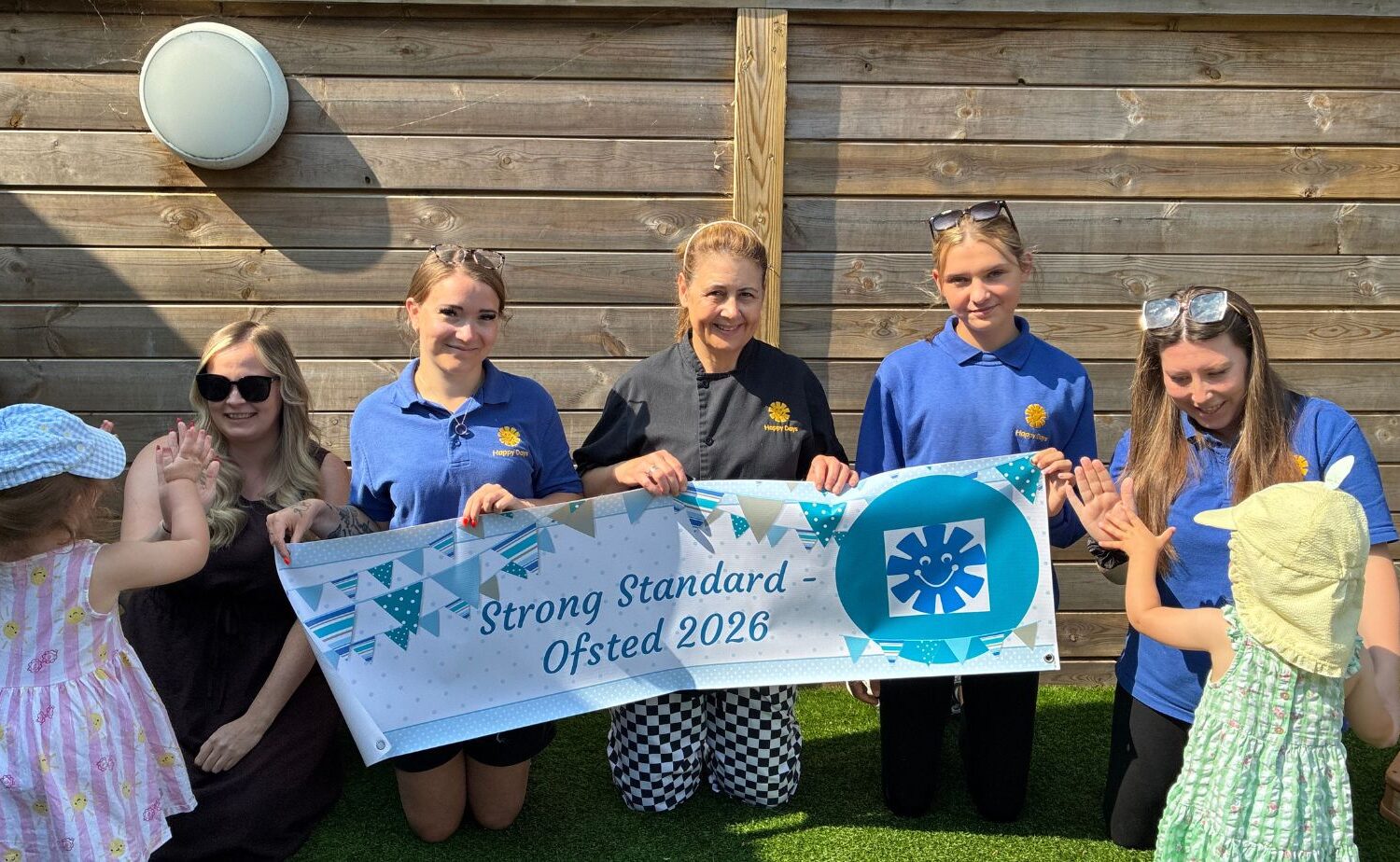
We are so pleased to announce that Happy Days Nursery and Pre-School, Verwood has been recognised as meeting Ofsted Strong Standard in all areas! We’re also proud to confirm that our safeguarding practices were judged as Met, reflecting the high priority we place on the safety and well-being of every child in our care.

Inspectors noted that our children: “develop high levels of independence and confidence in managing their own needs. Babies feed themselves using open cups and spoons, while older children confidently and independently serve meals, clear away their plates and wash them afterwards. Children continually cooperate well, share resources and take turns during play. All children are well prepared for their next stage of learning. “

We’d also like to spotlight Ofsted answered what it’s like to be a child at our setting like this: ‘Children thrive in this welcoming and nurturing setting. They benefit from a highly ambitious, broad and well-sequenced curriculum. Children of all ages, including those with special educational needs and/or disabilities, those who are disadvantaged and those with barriers to learning, enjoy meaningful experiences that build their knowledge and skills across all areas of learning. Babies squeal with delight as they hide inside a large cardboard box during imaginative play with enthusiastic staff. Older children confidently practise their football skills outdoors and celebrate one another’s success with excitement.’

Ofsted has recently moved away from single-word grades to provide a more detailed look at how nurseries perform. Instead of a one-size-fits-all label, settings are now evaluated against specific quality standards:

🔵 Exceptional: Significantly exceeds expectations.
🔵 Strong Standard: Securely above the expected quality.
🔵 Expected Standard: Consistently and reliably meets all requirements.
🔵 Needs Attention / Urgent Improvement: Areas where further work is required.

By achieving the Strong Standard across the board, Happy Days Verwood has proven to be a secure, effective, and high-quality environment for early years education.

The inspection team praised our warm and inclusive atmosphere. They observed first-hand how our children; from our curious babies to our confident pre-schoolers – settle in quickly and form deep, trusting relationships with our nursery team.

The report highlighted several key strengths:

🟡 Leaders have designed a highly ambitious, broad and well-sequenced curriculum
🟡 Staff know children extremely well and use accurate assessment to identify next steps, consolidate children’s learning and provide appropriate challenge
🟡 Children consistently behave well and show positive attitudes towards learning

Read the full report here.

To learn more about the way Ofsted reports work now, visit our blog.

We are Recruiting! Join us at Falmouth Happy Days to discuss career opportunities at our nursery.
 
Date: Tuesday 14th July
Time: 6pm-7.30pm
 
Come along to this informal recruitment event, meet the nursery team, enjoy pizza and discuss the current vacancies at Happy Days Nursery.
 
What to expect?
– Refreshments and pizza provided.
– Discuss your next early years career move.
– Promoting qualified career opportunities as our setting continues to grow and thrive.
– Meet members of our Senior Team to discuss career opportunities.
 
Why join us?
✨50% childcare discount
✨Christmas On Us – up to 4 gifted days off
✨Fully Funded Blue Light Card
✨Life Assurance
✨Extensive Health & Wellbeing Services
✨Structured Training, Mentoring and Clear Career Progression
 
Inspire their future, inspire your future, with a career in childcare.
 
📍 Where: Happy Days Nursery, Jubilee Road, Penwerris, Falmouth, TR11 2BB
☎ Call: 01326 314 735
📩 Email: [email protected]

Join us at Happy Days Nursery, Tunbridge Wells for a FREE 1 Hour Session for parents of children aged 0-1 years.
When: Monday 27 July | 9.30am – 10.30 am
Where: Happy Days Nursery & Pre-School, Clanricarde Garden, Tunbridge Wells, Kent, TN1 1PH
 
The class will be led by Gemma from Daisy First Aid and will cover:
  • Recovery position for a baby 
  • CPR for a baby 
  • Choking for a baby 
  • Spotting Meningitis and Sepsis
Please note this is an introductory course only and NOT a formal qualification
 
Babies under the age of 12 months are welcome to attend classes with parent(s) as we are breastfeeding friendly🙂.
 
Please email to confirm your place as spaces are limited!
 
📍 Where: Happy Days Nursery & Pre-School, Clanricarde Garden, Tunbridge Wells, Kent, TN1 1PH
☎ Call: 01892 341060
📩 Email:  [email protected]

Join us at Happy Days Nursery, Tonbridge for a FREE 1 Hour Session for parents of children aged 0-1 years.
When: Monday 6 July | 9.30am – 10.30 am
Where: Happy Days Nursery & Pre-School, Waterloo Road, Tonbridge, Kent, TN9 2SN
 
The class will be led by Gemma from Daisy First Aid and will cover:
  • Recovery position for a baby 
  • CPR for a baby 
  • Choking for a baby 
  • Spotting Meningitis and Sepsis
Please note this is an introductory course only and NOT a formal qualification
 
Babies under the age of 12 months are welcome to attend classes with parent(s) as we are breastfeeding friendly🙂.
 
Please email to confirm your place as spaces are limited!
 
📍 Where: Happy Days Nursery & Pre-School, Waterloo Road, Tonbridge, Kent, TN9 2SN
☎ Call: 01732 365 188
📩 Email:  [email protected]

Why Settling in Sessions Matter in Early Years

5 mins
Jun 11, 2026

Starting a new nursery is an anxious time for both parents and children, which is why a structured and generous settling in process is so important.

Every child is different and for that reason a good settling in process should take as long as you and your child need. Every child will respond differently; some will settle straight away and others will need more time and reassurance before they are ready to spend time away from you.

What are Settling in Sessions?

Settling in Sessions are designated days where you can attend nursery with your child before they start their regular attendance. They allow children to get used to the nursery environment, team and routine with the comfort of their parent/carer present, as each sessions go on the duration of time at nursery and away from their parent/carer will increase. We feel this sets your child up for the best start as it leaves them with a sense of understanding and comfortability with nursery life before their first day.

What does a thorough settling in process look like?

At Happy Days we have a unique settling in process that starts 6-8 weeks before your child’s start date, with the first few visits to nursery lasting only an hour, with you, their parent/carer, staying with them. We will work at your child’s pace, gradually lengthening the time they are in nursery and are away from their parent. The settling in process can take as long as your child needs.

The Settling in Process

Step 1: The Key Person

The first step in the settling in process is allocating your child to their Key Person.

At Happy Days, we are committed to adopting the Key Person approach to ensure that every child’s care is tailored to meet their individual needs. The Key Person will provide consistent and continuous care in order to support the development of close attachments which support a child’s emotional wellbeing, providing a secure base from which to learn. Children thrive when their needs are met by people they know, trust and respect.

Your child’s Key Person will build relationships with you so you feel reassured and confident that an adult who is tuned in to your child’s individual needs is caring for your child.

Your child’s Key Person will:

  • Develop secure attachments with your child to support their emotional wellbeing
  • Develop a collaborative partnership with you to ensure a continuity of care and learning between home and Nursery
  • Effectively communicate with you on a daily basis regarding your child’s day and learning experiences
  • Wherever possible meet the individual intimate care needs of your child
  • Continually monitor and assess the developmental progress of your child
  • Ensure that regular communication regarding your child’s development is shared with you
  • Support your child’s positive transition into Nursery and when they transition to another room/school

We will allocate your Key Person based on your child’s personality, likes and dislikes and try and align these with the Key Person. Don’t worry if your child does not form an attachment with their Key Person initially, these relationships take time and will develop over the course of the settling in process. However, on the rare occasion a child does not form a bond with their Key Person a new one will be allocated and the settling in process will continue whilst your child gets to know their new Key Person.

You will be advised of who your child’s Key Person is prior to your start date and your Key Person or Nursery Manager will contact you to arrange your settling in sessions.

Step 2: Settling In Sessions

  • Upon arrival at the setting the Nursery Manager will introduce you to your child’s Key Person and the rest of the room team
  • Your Key Person will have an age appropriate activity ready for your child’s settling in session
  • Together with your Key Person you will discuss the ‘Getting to Know Me Form’ to ensure that full information has been gathered in relation to your child’s individual needs
  • We request that you bring along a picture of your family and any pets from home that we can keep at nursery
  • The first session will be for a short period of time where we ask you to stay

What to expect on your first settling in session:

At the end of the first session, we will discuss how you felt the session has gone and arrange further sessions with the length and number of these depending on how your child has settled in their first session. Don’t worry, we will assess and review these sessions every time you and your child visit and slow down or speed up the process, depending on your child’s needs.

The aim is to increase the length of the settling in sessions and the period your child is away from you, whilst allowing your child to experience every part of nursery life including, meal times, sleep time, snacks, outdoor play, structured activities and more.

At the end of the settling in process, your child will be ready and eager to start nursery, enabling you to drop off on the first day confident that your child is happy, settled and well cared for.

Happy Days Settling in session FAQ

Q. Are they free?
A. YES!

Q. When do they take place?
A. 8 weeks before preferred start date whenever possible.

Q. How many do you have to do?
A. Duration is completely dependent on the nurseries recommendation and parents preference, however 8 weeks is our recommendation whenever possible.

Q. What if my child does not settle?
A. Every child is different and that’s why our settling in process can take as long as your child needs.

The First Day

We know that even though you and your child have been through the settling in process, the first day can still be an anxious time for you and your child. Your child’s Key Person will be there to greet you and your child and help them settle in quickly.

What to Bring to Nursery

  • At least one change of clothes
  • A sunhat during the Summer months
  • A pair of wellies
  • In colder weather, a woolly hat, gloves and warm coat (the children will explore the outdoor environment in all weathers)
  • Any medication your child may need during the session (please see our Medication Policy)
  • Any comforters your child may need throughout their time at Nursery

Top Tips

Focus on the positive: When getting ready for nursery having a positive conversation is very important. Having your child think about positive memories should help ensure they settle well and feel happy to wave goodbye in the morning.

Routine: Having a routine in the morning is also a good way of helping your child settle. Start by saying goodbye and explain when you will be back e.g. after lunch or after tea.

Happy Days Falmouth staff around a table writing on a mind map

Happy Days Falmouth’s Training day

2 mins
Jun 08, 2026

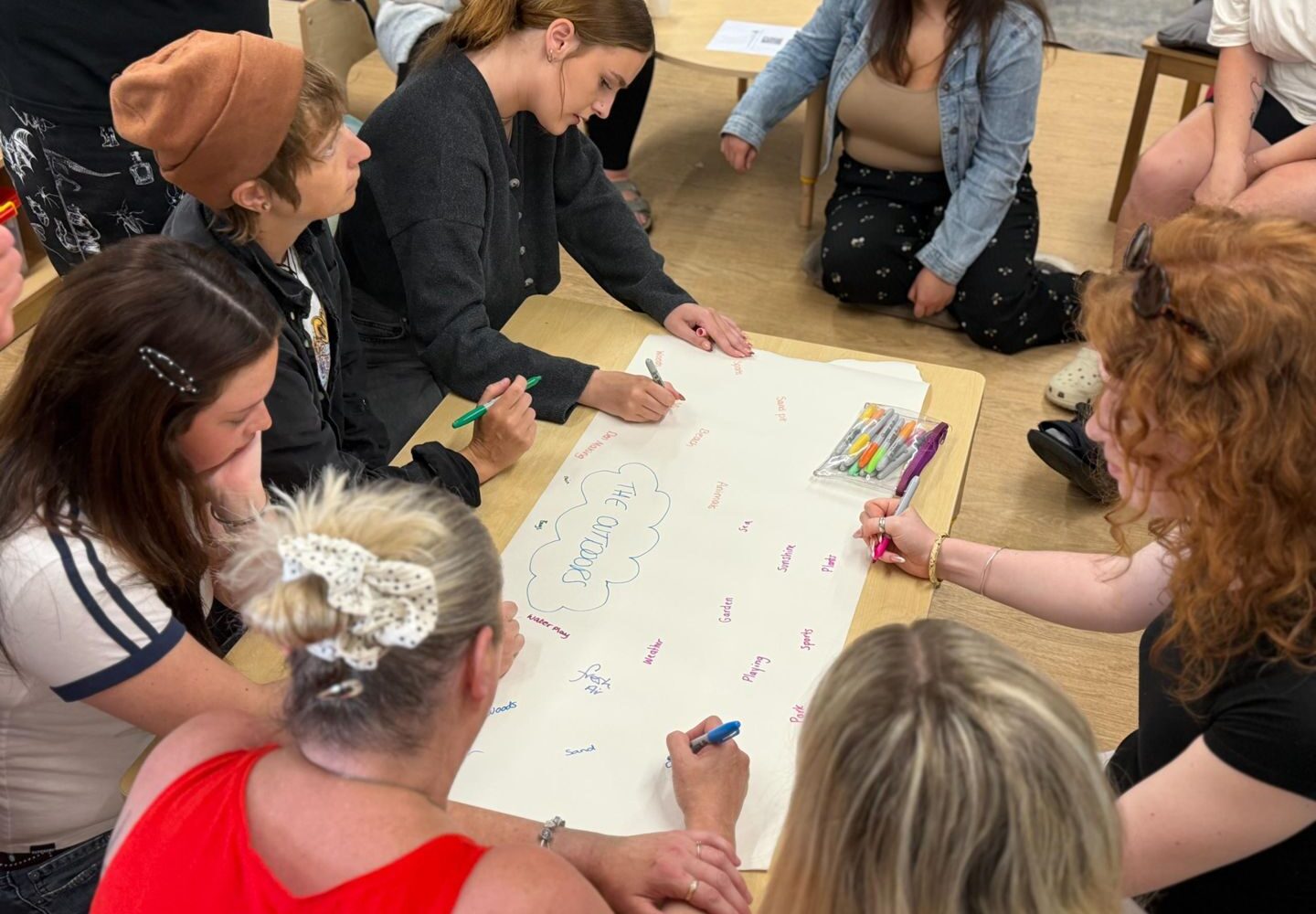
It’s safe to say inset day at Falmouth was a success! It was an incredible opportunity for the team to participate in a range of fun training and teambuilding activities. 💫

“To start the day, we engaged in a fun team-building activity where we divided into two groups to create the Happy Days logo. The challenge was to draw it using a pen attached to pieces of string, which made for an interesting way to control the pen! This required a lot of teamwork and focus.

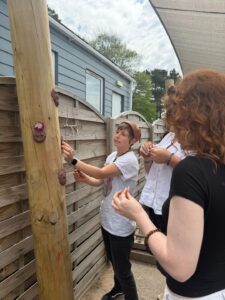
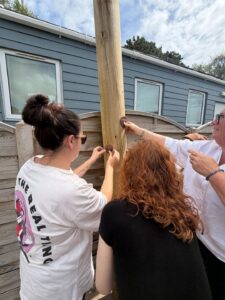
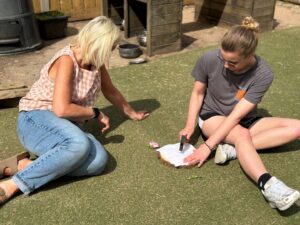
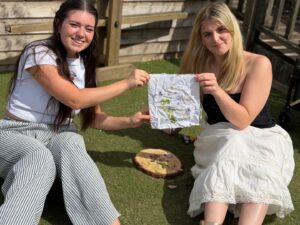
Afterwards, we were delighted to welcome Nelly from the Learning Through Landscapes/My Nature Play project, who led us in a two-hour session. During this time, we explored the significance of outdoor play, the essence of playfulness, and how adults can act as co-explorers with children. Following the discussions, we moved outdoors to our garden for some hands-on activities. The first task involved pairs working together to find a hard surface, choosing a tool such as a hammer, pebble, or rolling pin, and gathering flower parts along with two pieces of cloth. Each pair placed the flower parts on one cloth to create a pattern before laying the second cloth on top. Using their selected tools, they banged, rolled, or scraped the cloth to see the results, discovering that the colours transferred beautifully and left a lovely pattern behind!

Next, we introduced clay as the medium for expressing feelings. Each team member found a hard surface and a piece of clay to mold their face, allowing for unique interpretations of how they wished to portray their emotions. By the end of the day, the sun had helped set the clay faces! We are eager to implement some of these enjoyable activities in our nursery over the next few weeks!

In the afternoon, we continued with more team-building challenges, where the teams collaborated to construct the tallest tower using just large marshmallows and spaghetti. The challenge required the structure to stand unsupported for a full minute! Our winning team achieved a height of 16cm, while the runners-up reached an impressive 14cm.

We all took part in a Makaton session led by Louise from the Local Authority.

Later, the team split into three groups to dive deeper into our SEND policy with our current SENDCo, Katie. Cindy, the Explorers Room Supervisor, addressed important topics related to Under 2’s training, such as sleep patterns, developmental stages, and the two-year-old checks. We concluded the session with a curriculum recap led by Kate before finishing off the day with an engaging knowledge quiz in the sunshine!

It was such a successful day and the team took a lot from it in terms of new ideas to explore nature play, how we can best support the children in our care, recommendations for families etc. We now look forward to completing some of these amazing activities with your children in the coming weeks!” ~ Kate (Nursery Manager)

If you are looking for your next steps in Early Years Happy Days Falmouth is currently hiring for a range of roles and we would love to hear from you. 😊

~Happy Days Falmouth ⭐

Two boys looking at ipads on the sofa

A Guide to Screens and Young Children

2 mins
Jun 02, 2026

Screens are part of everyday family life. Most young children use screens in some form and for many parents they can be a useful tool for learning, entertainment and staying connected with family and friends.

However recent government guidance highlights that while screens are now a normal part of childhood, how, when and what children watch matters.

The first five years of life are a crucial time for brain development. During these early years, children learn best through talking, playing, exploring, moving and spending time with caring adults.

What Does the New Guidance Recommend?

Children under 2 years

  • Avoid screen use where possible.
  • Video calls and shared activities with a parent or carer are okay.
  • Focus on face to face interaction, play, singing, reading and conversation.

Children aged 2 to 5 years

  • Aim for no more than one hour of screen time each day.
  • Avoid screens during mealtimes.
  • Avoid screens during the hour before bedtime.
  • Choose age appropriate, slower paced content.

Why does it matter?

Research suggests that too much screen use can reduce the time children spend:

  • Talking and communicating with others
  • Playing and being physically active
  • Reading books and listening to stories
  • Developing attention and concentration skills
  • Getting the sleep they need

Studies have also found links between very high levels of screen use and delays in language development. Early years professionals have reported that some children are now arriving at school expecting books to work like tablets, attempting to swipe or tap pages rather than turn them.

Not All Screen Time Is the Same

The quality of screen use is just as important as the amount.

Better choices:
✓ Watching together and talking about what you see
✓ Slower paced, age appropriate programmes
✓ Video calls with family members
✓ Interactive content that encourages conversation and learning

Try to avoid:
✗ Fast paced, social media style videos
✗ Endless scrolling content
✗ Screen use during meals
✗ Screens as part of the bedtime routine
✗ Young children using devices alone for long periods

Watch Together When You Can


Children learn more when adults join in. Talking about what is happening on screen, asking questions and making connections to real life can help support language, thinking and understanding.

Simple questions such as:

  • “What do you think will happen next?”
  • “Can you spot the red car?”
  • “How do you think that character feels?”

Can turn screen time into a shared learning experience.

Simple Screen Swaps


Small changes can make a big difference.

Instead of a screen, try:

  • A bedtime story before sleep / Looking at books together
  • Singing songs together
  • Drawing or colouring
  • Simple board games
  • Outdoor play
  • Talking about your day at mealtimes

You don’t have to be perfect. Even a few small screen free moments each day can support your child’s development.

A Message for Parents and Carers


Parenting in the digital age can be challenging. The aim of this guidance is not to blame or judge families, but to offer practical support. Every family is different. Focus on creating healthy habits, spending time together and making screen use as positive and purposeful as possible.

Remember: Talk more. Play more. Read more. Connect more.

These everyday interactions are some of the most powerful ways to support your child’s development.

Useful links

1001 Critical Days Foundation
www.1001criticaldays.com/press-releases/from-teddies-to-tablets-press-release

BBC News Article: Is screen time always bad and how do I manage it?
https://www.bbc.co.uk/news/articles/crk1e11ek8vo

The Conversation Article: UK parents urged to curb fast‑paced screen content for small children – neuroscientist who advised government explains why
https://theconversation.com/uk-parents-urged-to-curb-fast-paced-screen-content-for-small-children-neuroscientist-who-advised-government-explains-why-278732

Department for Education: New advice for parents on screen time for young children
https://educationhub.blog.gov.uk/2026/03/new-advice-for-parents-on-screen-time-for-young-children/

Children in the garden with a butterfly at Happy Days Penair

Butterflies in Happy Days Penair!

1 mins
May 28, 2026

🦋Butterflies in Happy Days Penair!🦋

This week is both National Children’s Gardening Week and Garden Wildlife Week!

Over the last few weeks the adventurers have been keeping an eye on their caterpillars and learning about their transformation into a chrysalis and then finally into a butterfly. 🐛

After watching them change the Eco Committee released them into the wild! Eco School activities like this make up part of our Inquisitive & Ambitious Thinker aspect of Happy Days bespoke curriculum.

This aspect helps to foster a child’s understanding, curiosity, and appreciation of their natural world while developing their awareness of the importance of environmental issues and sustainability. 🌳

~Happy Days Nursery Penair